A Professional Designer’s Look at the Golden Crown Embroidery Design
When a new embroidery design lands in my library, my first thought isn’t just about its beauty—it’s about its utility. How will it actually stitch out? Where does it belong? The so-called Golden Crown design promises to take creations to “the next highest levels,” and as someone who relies on designs for client work and my own small shop products, that’s a claim I need to test in reality, not just on a screen.
The Immediate Mood and Personality of This Crown
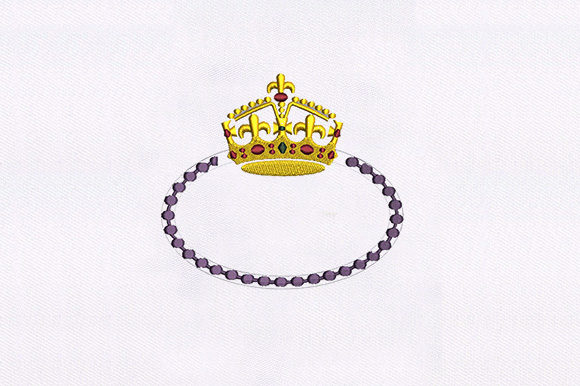
The first impression is exactly what the name suggests: regal, celebratory, and a touch opulent. This isn’t a minimalist motif; it’s a statement piece. The shape and layout feel balanced, leaning towards a classic, symmetrical crown silhouette. For embroidery designers and crafters, this visual personality is key. It creates a mood of achievement, celebration, or luxury. I immediately thought of it for personalized gifts—a milestone birthday, a graduation, a “king” or “queen” of the day theme for a baby item. It’s an accessory design, yes, but it carries a lot of thematic weight.
Where the Golden Crown Naturally Belongs in Your Project Lineup
My mind starts cataloging real-life applications. For a custom apparel client wanting a special sweatshirt or tee, this could be the perfect focal point. On a tote bag, it would transform a simple carrier into a gift-worthy item. For small business owners and Etsy sellers creating boutique products, imagine this crown on a premium pillow cover or a decorative kitchen towel as part of a “royal treatment” themed set. As a potential embroidered patch, it could be stunning on a cap or jacket, though the detail level needs consideration.
It feels particularly suited for projects where you want to elevate the perceived value. A baby blanket with this crown embroidered in the corner isn’t just a blanket; it’s a heirloom-inspired gift. For creative entrepreneurs selling digital embroidery files or using designs in printable mockups, this crown has strong visual appeal for previews, suggesting a finished product that feels special and crafted.
Performance in Real-World Stitching Situations
The practical judgment begins. The description mentions multiple embroidery file formats, which is essential for machine embroidery design compatibility across different systems—a must for commercial embroidery work. But the real test is on fabric.
On a sturdy canvas tote bag or a cotton sweatshirt, with proper stabilizer, I envision the satin stitch areas (likely outlining the crown) and fill stitch sections (for the interior details) coming out with good clarity. The design’s density will be crucial; too dense on a thin t-shirt could cause puckering, while on a textured fabric like a towel, it might need adjustments to remain sharp.
For darker fabric backgrounds, thread color contrast is paramount. A “golden” crown implies light threads—metallic golds, bright yellows, creams. On a black sweatshirt, with the right thread choice, it would pop beautifully. On a light background, it could feel more subtle and elegant. This versatility is a strength, but it requires planning.
Scenarios Where This Design Demands Extra Care
Not every project is a perfect fit. My experience flags a few areas for careful use. On curved surfaces like caps, the design’s likely symmetrical shape might need testing to ensure it stitches cleanly without distortion on the curve. Small hoop sizes could be a constraint if the design is large; always confirm the required hoop size before starting.
If the design has intricate corners or tiny decorative accents, they might get lost on very textured fabrics or require precise tension settings. For products destined for frequent washing, like baby clothes or kitchen linens, the stitch integrity and thread choice become even more important to ensure longevity.
And for anyone in the craft business selling finished items, checking the licensing terms for commercial use is a non-negotiable step before this design goes on any small shop merchandise or craft fair product.
The Impact on Your Business and Your Customer
Beyond the stitch-out, how does using the Golden Crown design affect your work? For apparel decorators and handmade shop owners, a well-executed crown on a product elevates its perceived value. It feels intentional and professional. This builds customer trust—they see a clean, detailed embroidery and associate it with quality.
For brand consistency, if your niche is celebratory gifts or luxury-themed items, this design could become a core asset. Its giftability is high; it’s recognizably special. In an Etsy listing or digital product preview, a clean mockup of this design suggests a handmade presentation that’s both skilled and thoughtful, which directly boosts buyer engagement.
Practical Notes From the Embroidery Desk
Before I’d ever run this for a client or my own product, my routine applies:
- Stitch it out on scrap fabric first, preferably on both a light and dark background to judge contrast.
- Review the stitch density and detail level closely—are small elements clear?
- Check the required hoop size against the project I intend for it (e.g., a baby bib needs a smaller hoop than a pillow).
- Use the appropriate stabilizer for the target fabric—no shortcut here.
- Consider creating both a physical sample and a black-and-white digital mockup to see how it holds up as a graphic asset.
- Confirm the embroidery file formats work with my machine and, if selling finished products, that the license permits it.
This process turns a promising design like the Golden Crown into a reliable tool. It moves from a digital file to a trusted part of my embroidery project toolkit for creating real finished products.
A Final, Realistic Assessment
The Golden Crown embroidery design, from an experienced designer’s viewpoint, has clear potential. Its thematic strength makes it a natural fit for personalized gifts, celebratory custom apparel, and boutique products where visual appeal is paramount. Its success, however, hinges entirely on the practical steps: testing, adapting to fabric, and ensuring commercial clarity. When used thoughtfully—on the right product, with the right preparation—it can indeed help take a creation to a higher level, not through hype, but through the tangible quality of a well-stitched, well-placed piece of embroidery. That’s the judgment that matters for anyone turning a design into a real-world product.