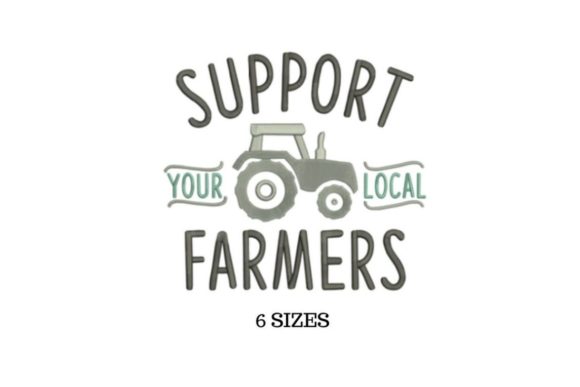
From Digital File to Booth Display: Evaluating Support Farmers
As an embroidery designer preparing for a craft fair, the first step is always a cold, practical review of a design like Support Farmers. This isn’t about whether it’s beautiful—the description assures us it is—but about how that beauty translates into a craft fair product that sells. From the title alone, this design carries a clear, warm-hearted message that resonates in today’s market. My initial impression is that Support Farmers leans toward a rustic, heartfelt, and community-oriented aesthetic. It’s not minimalist; it feels decorative and meaningful, which is a powerful combination for handmade product appeal.
Where Support Farmers Stands Out in a Booth Display
Imagine your table: tote bags, aprons, tea towels, caps. A design like Support Farmers needs to be placed on products where its message is contextually perfect. It won’t be your flashy, funny item; it will be your authentic, feel-good item. On a sturdy canvas tote bag, it becomes a statement piece for shoppers who frequent farmers' markets. Embroidered on a durable apron, it instantly connects with home cooks and gardeners. On a classic, high-quality tea towel, it transforms a simple kitchen item into a giftable symbol of support.
The key is visual clarity at a glance. Customers walking past your booth should understand the design immediately. Support Farmers, with its direct message, has that advantage. It will likely work best as a medium to large focal design, not a tiny accent. A small, densely stitched version on a cap might lose readability, especially if there’s small lettering. Always test the design on scrap fabric first at your intended size to check this.
Practical Production for Batch Selling
For an Etsy seller or small shop producing multiple units, repeatability is crucial. The description mentions lovely features stitching out beautifully, but the practical designer must investigate. What is the stitch density? High-density areas on textured fabrics like towels or on curved cap surfaces can be tricky and require the right stabilizer. On dark fabrics, thread contrast is vital for the design to pop. You must review spacing and confirm the hoop size needed. Does the design have intricate details that might snag on a loosely woven market bag? These questions are answered by stitching one real sample.
I advise creating at least one real mockup on the final product material—a tote bag or towel—before batch production. This reveals how the embroidery file interacts with fabric texture. A design with “lovely features” might include delicate elements that require perfect tension. Batch-producing embroidered patches of Support Farmers could also be a brilliant, lower-cost product option, allowing customers to apply the message anywhere.
Photographing & Presenting the Handmade Quality
The perceived value of your finished product hinges on how it photographs. Support Farmers should look crisp and intentional in your Etsy listings and printable mockups. Good stitch definition showcases handmade quality. If the design is too small or too dense in photos, it looks muddy. On the contrary, a well-executed, sizable embroidery on a clean linen pillow cover or a simple fabric pouch photographs as premium. This directly impacts customer attention and buyer engagement online and in person.
For your booth, use this design on products that elevate it. A beautifully embroidered tea towel displayed next to a basket of wooden spoons creates a scene. An apron hung prominently draws the eye. The design itself, being message-driven, encourages conversation. It can strengthen your booth’s thematic brand consistency if your other items also cater to a homemade, local, or rustic lifestyle.
Critical Designer Notes Before Production
- Never skip the scrap test. Run the machine embroidery design on a piece of your actual product fabric (canvas, linen, cotton) to check for puckering, thread breaks, or clarity issues.
- Check thread contrast meticulously. Compare potential fabric colors—the design might shine on natural tones but need bright threads on dark denim.
- Inspect stitch density in the file preview. Areas that are too dense can wear quicker on functional items like bags and aprons.
- Confirm commercial licensing. The description doesn’t specify license terms. Before selling any finished product, you must verify that your digital embroidery file license permits commercial embroidery and sale of physical goods.
- Create a real, physical sample. This mockup is your ultimate guide to hoop size, stabilizer choice, and overall production time—key for pricing your craft fair product correctly.
The Final Verdict for Creative Entrepreneurs
Support Farmers has inherent selling power because it taps into a positive, widespread sentiment. For the creative entrepreneur, its success will depend entirely on thoughtful product pairing and flawless execution. It is likely not a “quick stitch” for tiny items; it deserves space to be seen and appreciated. On the right product—a well-made tote, a premium apron, a crisp tea towel—it elevates the item’s value and tells a story customers want to share. That is the core of a great small shop product: a beautiful design that not only stitches out well but also stitches itself into the customer’s life and values. Your job is to give it the best canvas, in both fabric and context, to do just that.